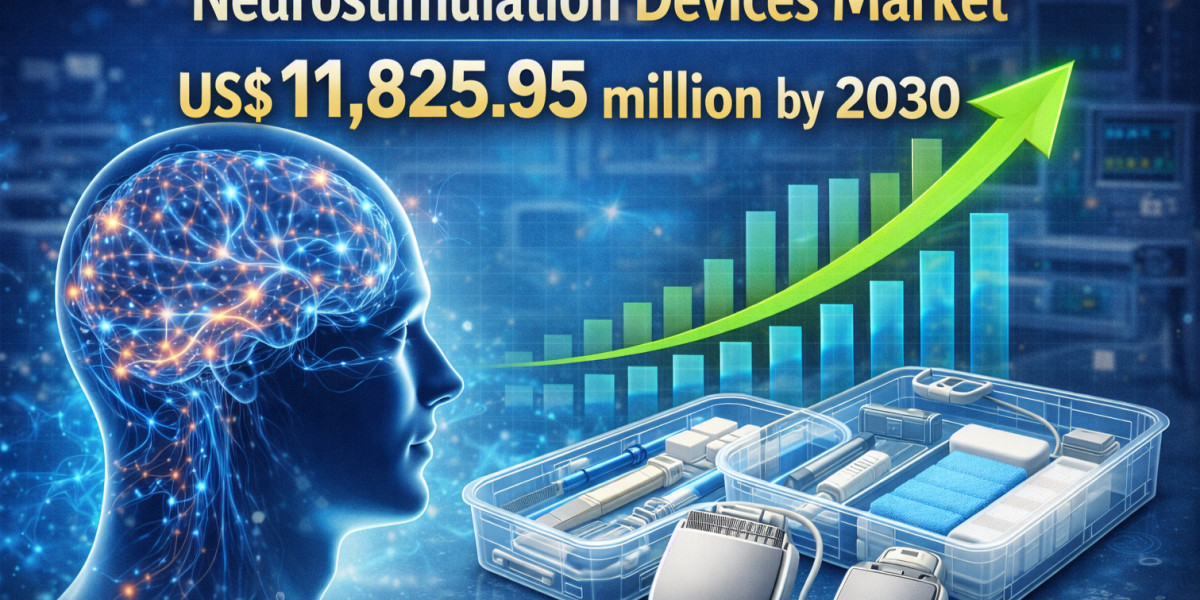

Neurostimulation devices represent a rapidly evolving class of medical technologies that influence neural function through targeted electrical stimulation. These devices, available in both implantable and non-invasive forms, are designed to alter abnormal nerve signaling associated with a wide range of neurological and chronic conditions. Clinically, neurostimulation therapies are widely adopted for managing chronic pain, treatment-resistant epilepsy, Parkinson’s disease, essential tremor, depression, and other complex neurological disorders where conventional drug therapies often fail to provide adequate relief.
Neurostimulation Devices Market Size and Growth Dynamics
The global neurostimulation devices market has entered a phase of sustained expansion, supported by growing clinical acceptance and continuous innovation. In 2022, the market was valued at US$ 5.8 billion and is projected to reach US$ 11.83 billion by 2030, growing at a compound annual growth rate (CAGR) of 9.3% during the 2023–2030 forecast period. This strong growth trajectory reflects the increasing demand for long-term, minimally invasive, and non-pharmacological treatment alternatives for neurological and pain-related conditions.
Key Growth Catalysts and Market Constraints
A major catalyst for market growth is the rising prevalence of neurological disorders worldwide, driven largely by aging populations. Disorders such as Parkinson’s disease, Alzheimer’s disease, neuropathy, and dystonia disproportionately affect older individuals and require ongoing therapeutic management. Neurological diseases account for more than 6% of the global disease burden, highlighting the growing clinical and economic impact on healthcare systems.
The neurostimulation devices market has also benefited significantly from technological progress. Innovations such as adaptive closed-loop stimulation, extended battery life systems, wireless programming, and less invasive implantation techniques have enhanced therapeutic precision while reducing patient discomfort. Additionally, favorable regulatory environments in key markets supported by approvals from the U.S. FDA and European regulatory bodies have accelerated the commercialization and adoption of advanced neurostimulation solutions.
Despite these advancements, market growth is moderated by several challenges. High device and procedural costs, uneven reimbursement structures, and the limited availability of trained neurosurgeons and pain specialists remain significant barriers, particularly in developing economies. Addressing these challenges will be critical to achieving broader global adoption.
Download PDF Copy- https://www.theinsightpartners.com/sample/TIPRE00002778
Product, Application, and End-User Insights
From a product perspective, spinal cord stimulation (SCS) systems account for the largest share of the market and are expected to maintain their leadership through 2030. Their effectiveness in treating refractory chronic pain conditions such as failed back surgery syndrome and neuropathic pain continues to drive demand. Meanwhile, deep brain stimulation (DBS) devices are gaining momentum due to their proven efficacy in managing Parkinson’s disease and other movement disorders.
In terms of application, pain management remains the dominant segment, reflecting the global burden of chronic pain and the healthcare industry’s growing emphasis on reducing opioid dependence. Among end users, hospitals represent the primary adoption setting, supported by advanced surgical infrastructure, multidisciplinary expertise, and higher procedural volumes.
Regionally, North America leads the global neurostimulation devices market, driven by high healthcare expenditure, strong research and development activity, and early adoption of innovative medical technologies. Europe follows closely, while the Asia-Pacific region is expected to emerge as a key growth engine, supported by expanding healthcare infrastructure, increasing awareness of neuromodulation therapies, and improving access to advanced medical treatments.
Leading Companies in the Neurostimulation Devices Market
- Medtronic Plc – Global leader with a broad range of neuromodulation solutions
- Abbott Laboratories – Known for innovative spinal cord stimulation technologies
- Boston Scientific Corporation – Offers comprehensive neuromodulation platforms
- Nevro Corp – Pioneer in high-frequency spinal cord stimulation systems
- LivaNova Plc – Strong focus on vagus nerve stimulation therapies
- Synapse Biomedical Inc – Specializes in neurostimulation for respiratory and spinal injury care
- Nalu Medical, Inc – Develops compact, patient-friendly neurostimulation devices
- ElectroCore Inc – Leader in non-invasive vagus nerve stimulation technologies
- MicroTransponder Inc – Focuses on neurostimulation-assisted neurological rehabilitation
Future Outlook
Looking ahead, the neurostimulation devices market is poised for continued growth as innovation reshapes the neuromodulation landscape. The adoption of artificial intelligence, machine learning enabled therapy optimization, wearable neurostimulation systems, and fully non-invasive treatment modalities is expected to enhance treatment personalization and accessibility. Furthermore, increasing investment in neuroscience research and the gradual integration of advanced therapies into emerging healthcare markets will create significant growth opportunities. As healthcare systems worldwide shift toward precision medicine and long-term, non-drug-based treatment strategies, neurostimulation devices are set to play an increasingly central role in neurological and chronic pain management through 2030 and beyond.
Related Reports-