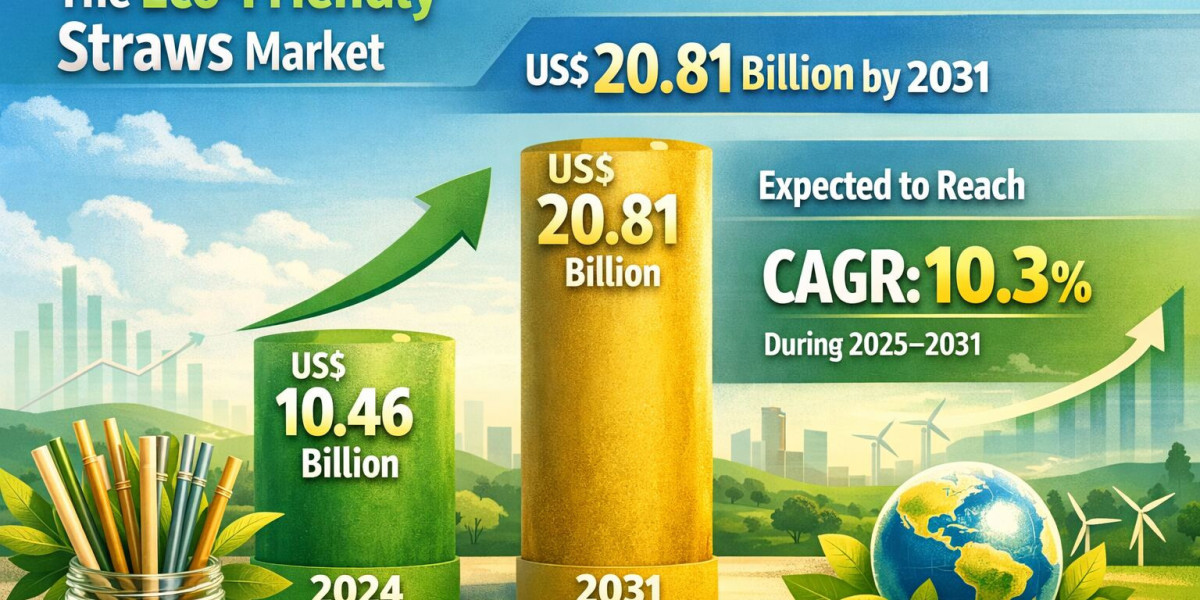

The Eco-friendly Straws industry is experiencing strong momentum as sustainability moves from a niche preference to a mainstream expectation. The Eco-friendly Straws market is projected to grow from US$ 10.46 billion in 2024 to US$ 20.81 billion by 2031, registering a CAGR of 10.3% during 2025 to 2031. This growth reflects a combination of regulatory pressure, rising consumer awareness, and proactive initiatives by food service operators and packaging manufacturers. Social media influence is also playing a notable role in shaping eco-conscious consumer behavior and accelerating product adoption.
Eco-Friendly Straws Market Overview and Growth Drivers
Growing awareness of plastic pollution is a key factor driving demand for eco-friendly straws. Plastic straws contribute significantly to marine pollution and landfill waste due to their single-use nature and long decomposition timelines. Governments worldwide are responding with strict regulations and bans on single-use plastics, creating favorable conditions for biodegradable and reusable alternatives.
Countries such as France, Germany, Canada, China, and India have implemented bans or reduction targets for single-use plastics, including plastic straws. These policies are compelling restaurants, cafes, and beverage brands to transition toward paper, bamboo, PLA, PHA, bagasse, silicone, metal, and glass straws. Eco-friendly straws decompose much faster than conventional plastics, often within weeks or months under composting or natural conditions, without leaving harmful microplastics.
Material innovation is another growth catalyst. Manufacturers are investing in water-resistant paper layers, biodegradable coatings, and plant-based polymers to improve durability and usability. These advances address earlier performance concerns while maintaining environmental integrity.
Rising Adoption by Quick Service Restaurants and Cafes
Quick service restaurants are among the most influential adopters of eco-friendly straws. Packaging waste from QSRs is a major contributor to environmental pollution, and sustainable alternatives are increasingly viewed as a brand differentiator. Global food chains are aligning sustainability initiatives with customer expectations to strengthen brand loyalty.
Major QSRs and beverage chains have already taken decisive steps. Burger King introduced multiple sustainable packaging items, Starbucks eliminated plastic straws and redesigned lids, A&W replaced plastic straws with biodegradable paper options, and Taco Bell shifted to paper straws in regions affected by plastic bans. These initiatives help companies streamline waste management, reduce regulatory risk, and attract environmentally conscious consumers.
As sustainability becomes embedded in purchasing decisions, eco-friendly straws are evolving from compliance-driven substitutes into strategic brand assets.
Download Sample PDF : https://www.theinsightpartners.com/sample/TIPRE00010209
Market Segmentation Insights
By product type, straight straws accounted for the largest market share in 2024 due to their widespread use across beverages. Flexible straws and other specialty formats continue to gain traction in niche applications.
Based on material, paper straws dominated the market in 2024 owing to cost effectiveness, wide availability, and regulatory acceptance. Materials such as PLA, PHA, bamboo, bagasse, and silicone are gaining momentum as durability and compostability improve.
By end user, the food service segment leads the market, particularly QSRs, cafes, and bars. Retail demand through supermarkets, convenience stores, and online platforms is also expanding as consumers increasingly use eco-friendly straws at home.
Asia Pacific Emerges as a High-Growth Region
Asia Pacific is expected to witness significant growth during the forecast period. Rapid urbanization, expanding food service infrastructure, and rising online food delivery demand are driving straw consumption. Countries such as China, India, Japan, and Australia are seeing higher beverage intake influenced by Western food culture and changing lifestyles.
Strong regulatory action, growing environmental awareness among young consumers, and standardized sustainability goals by multinational food chains are accelerating adoption across the region. Rising demand for beverages like bubble tea, shakes, and specialty coffees further supports market growth.
Key Players in the Eco-Friendly Straws Market
Canubio
Kurma Descartaveis
Pixpel Embalagens Sustentaveis LTDA
Ecofactory
EcoBiodegradavel
Duni AB
Huhtamaki Oyj
Pactiv LLC
Tetra Pak International SA
Greenprint LLC
These companies focus on material innovation, regional expansion, and partnerships with food service operators to strengthen their market presence.
Trending Reports :
Christmas Decoration Products Market
Future Outlook
The future of the eco-friendly straws market looks promising as sustainability becomes a core business strategy rather than a regulatory obligation. Continued innovation in biodegradable materials, expanding adoption by global QSRs, and increasing consumer preference for eco-conscious products will sustain market growth. Social media advocacy and transparent sustainability communication are expected to further amplify demand, positioning eco-friendly straws as a standard component of responsible packaging ecosystems.
Questions :
1. Why is the eco-friendly straws market growing so rapidly?
The market is growing due to global bans on single-use plastics, rising environmental awareness, material innovation, and strong adoption by quick service restaurants and beverage chains.
2. Which material dominates the eco-friendly straws market?
Paper straws currently hold the largest market share due to their affordability, availability, and compliance with plastic ban regulations, though alternatives like PLA and bamboo are gaining traction.