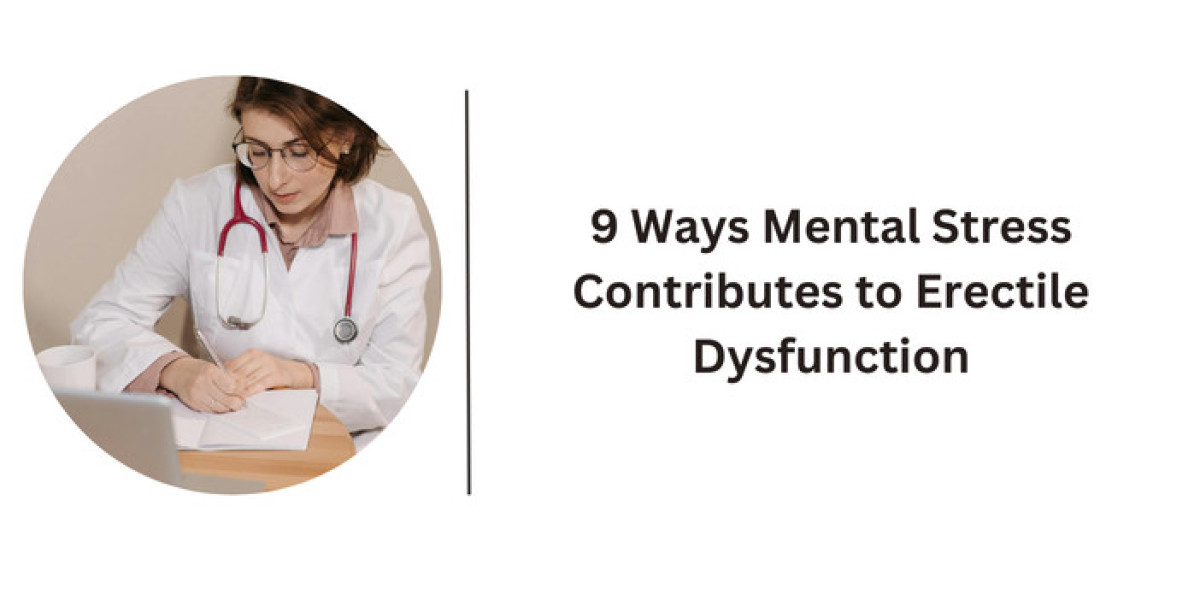

Erectile dysfunction (ED) is often misunderstood as a purely physical condition, but mental stress is one of the most powerful and overlooked contributors to ED, especially in young and middle-aged men. Chronic stress disrupts hormonal balance, nervous system function, blood flow, and psychological readiness—all essential for healthy erections.
This article explains nine evidence-backed ways mental stress contributes to erectile dysfunction, helping readers understand why addressing stress is a critical part of ED treatment.
Understanding the Stress–Erection Connection
An erection depends on the parasympathetic nervous system, which governs relaxation and sexual arousal. Mental stress activates the sympathetic “fight-or-flight” response, directly opposing erection physiology.
1. Stress Increases Cortisol, Which Suppresses Sexual Function
Chronic mental stress elevates cortisol, the body’s primary stress hormone.
How this affects erections
Reduces nitric oxide availability
Impairs blood vessel dilation
Blunts sexual arousal signals
Interferes with testosterone signaling
High cortisol levels are consistently linked to lower libido and weaker erections, even in younger men.
2. Stress Disrupts the Nervous System Balance
Erections require a shift into a relaxed parasympathetic state. Stress keeps the body locked in sympathetic dominance.
Resulting effects
Difficulty initiating erections
Inability to maintain firmness
Rapid erection loss during intercourse
This mechanism explains why many men experience situational ED despite normal physical exams.
3. Performance Anxiety Creates a Self-Reinforcing Loop
Mental stress often manifests as performance anxiety, where fear of failure becomes the primary barrier.
The cycle
Stress causes an erection issue
Fear of recurrence increases anxiety
Anxiety suppresses arousal
ED becomes consistent
Over time, the brain conditions itself to associate sex with pressure rather than pleasure.
4. Stress Impairs Blood Flow Through Vascular Tension
Mental stress causes vasoconstriction, tightening blood vessels throughout the body—including those supplying the penis.
Why this matters
Reduced penile blood inflow
Lower erection rigidity
Increased likelihood of erection loss
Even mild vascular constriction can significantly impact erectile quality.
5. Stress Disrupts Sleep, Which Weakens Erections
Stress-related insomnia or poor sleep quality directly affects sexual health.
Sleep-related ED mechanisms
Reduced nighttime erections
Disrupted testosterone production
Lower energy and libido
Increased irritability and anxiety
Men with chronic sleep deprivation report higher ED prevalence, independent of age.
6. Stress Lowers Libido and Sexual Motivation
Mental overload reduces dopamine activity, the neurotransmitter associated with motivation and pleasure.
Consequences
Decreased sexual desire
Reduced arousal response
Emotional disconnection from intimacy
Low libido and ED often coexist when stress is unmanaged.
7. Stress Fuels Depression and Emotional Numbness
Long-term stress is a major risk factor for depression, which independently contributes to erectile dysfunction.
Depression-related ED effects
Blunted emotional response
Reduced arousal signaling
Lower confidence and self-worth
This creates a compounded psychological barrier to sexual performance.
8. Stress Increases Muscle Tension, Including the Pelvic Floor
Mental stress often leads to chronic muscle tightening, including the pelvic floor muscles involved in erections.
Why this matters
Impaired blood trapping in the penis
Reduced erection firmness
Ejaculatory control issues
Pelvic tension is a common but underdiagnosed contributor to stress-related ED.
9. Stress Reduces Confidence and Sexual Self-Image
Mental stress alters self-perception, making men hyper-aware of perceived failures.
Impact on ED
Reduced sexual confidence
Increased self-monitoring during sex
Difficulty staying mentally present
Confidence plays a critical role in maintaining erectile stability.
Related